

Old docks usually show trouble before they fail outright. The warning signs may start small. One section feels lower than the rest. A connection rattles when someone walks across it. Deck boards feel soft after years of exposure. Those changes are worth paying attention to. A boat dock builder can tell whether the problem is a simple repair or a sign that the structure needs more serious work.
Sagging or Uneven Sections That No Longer Sit Level
A dock should not develop noticeable dips, twists, or low spots without a reason. Sagging can point to weakened framing, damaged flotation, settling supports, or connections that are no longer carrying loads evenly.
On a fixed dock, the problem may begin below the waterline where posts or supports are difficult to see. An aluminum floating dock can sit unevenly if a float is damaged or weight is no longer distributed correctly.
If the slope is getting worse, it is better to have the structure inspected than to keep adding shims or temporary supports.
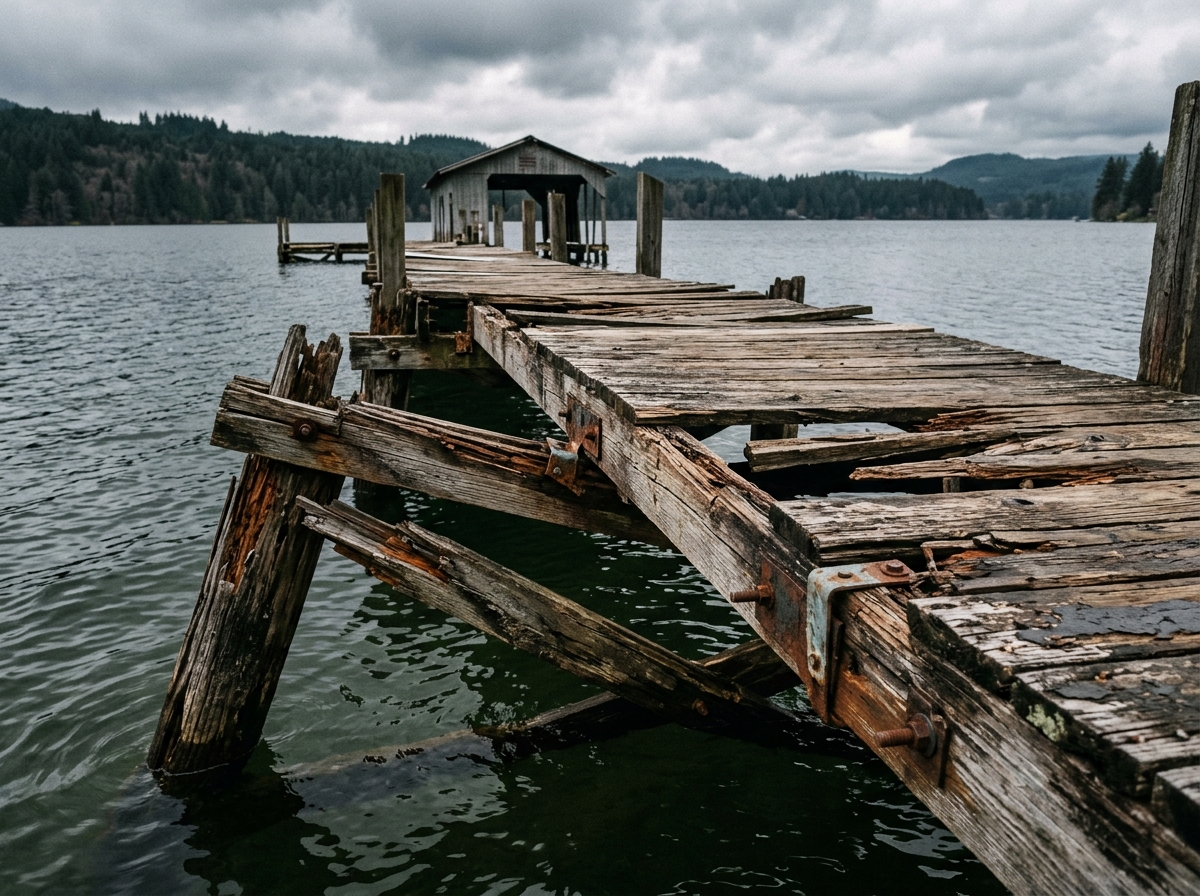
Loose Connections That Let the Dock Shift More Than It Should
Some movement is normal on floating systems. Excessive movement is different.
Loose hinges, worn bolts, damaged brackets, or enlarged connection holes can let sections move farther than they were designed to. That extra motion puts more strain on nearby joints. It can also make the deck feel unstable underfoot.
Floating dock builders often check several connection points because one loose joint may be a symptom of a larger alignment issue.
Cracked Supports Around High-Stress Areas of the Dock
Cracks often appear where loads collect. Common places include corners, braces, lift attachments, roof supports, and areas where dock sections meet.
Small cracks should not be ignored simply because the dock still feels usable. Repeated wave action and foot traffic can keep working the same weak area.
With metal docks, cracked welds or bent frame members need a professional look. Older wood-supported structures may show splitting around bolts or heavily loaded joints.
Rusted or Worn Hardware That Is Starting to Lose Its Hold
Bolts, hinges, chains, brackets, and other hardware spend years around water. Corrosion and wear can gradually reduce how well those parts hold.
Surface discoloration is not always a structural problem. Deep corrosion, thinning metal, loose fasteners, or badly worn hinge pins are more concerning. Hardware should also be compatible with the surrounding dock material.
Owners comparing replacement aluminum docks may want to look closely at connection hardware and how easy those parts are to inspect later.
Soft or Damaged Decking That Feels Unsafe Underfoot
Decking is often the first place people notice age. Soft spots, loose panels, cracked boards, raised fasteners, and sharp edges can all create a walking hazard.
Wood decking can weaken after long exposure to moisture if it is not maintained. Other deck materials can develop their own problems, including loose attachments or damaged surfaces.
Replacing a few boards may solve a local issue. If large areas feel uneven or unstable, the frame underneath should be checked too.
Floats That Sit Too Low or No Longer Support the Dock Evenly
A floating dock should sit at a reasonably consistent level. One corner riding noticeably lower than the others can point to a damaged float, added weight, or a support problem.
Water inside a compromised float can change how that section behaves. The dock may lean when people walk across it or sit lower even when it is empty.
This is also a good time to check how floats are attached. Loose or damaged mounts can let the flotation shift beneath the frame.
Anchoring Problems That Let the Dock Pull, Twist, or Drift
A dock that suddenly moves farther than it used to deserves attention. Anchors can shift. Chains and cables can wear. Pilings may loosen or lean. The dock itself may also have changed enough that the original anchoring setup no longer controls it properly.
Wind and wakes can make the problem obvious. The dock may pull sideways, twist at the gangway, or bang against nearby structures.
At that point, guessing at a repair can create more trouble. A professional can check the frame, anchors, connections, flotation, and deck as one system. Flotation Systems Inc. is a resource for owners who decide an aging dock is ready for replacement or major redesign. The company works with all-aluminum residential and commercial dock systems, along with anchoring, decking, gangways, ramps, and custom layouts for different waterfront conditions.