

When July hits Pennsylvania, the humidity doesn’t just linger—it settles into your bedroom, your sheets, and your pillow. You kick off the covers, flip the pillow to the cool side, and within minutes, you’re awake again, staring at the ceiling. The combination of warm nights and poor airflow can turn a simple night’s sleep into a frustrating battle. Before you invest in a new mattress or crank the AC to arctic levels, consider that your pillow might be the weakest link in your sleep setup. If you’re wondering whether a different pillow could actually help, you can read Peak Pillows’ cooling pillow test to see how specific models perform in real-world conditions. Beyond just swapping out gear, though, there are several practical strategies that can dramatically improve your comfort on those sticky nights.
Quick Answer
The most effective strategy for sleeping comfortably on hot Pennsylvania nights is to combine passive cooling methods with moisture-wicking bedding. Specifically, use a breathable cooling pillow designed for airflow, switch to natural-fiber sheets like cotton or linen, and optimize your bedroom environment by keeping curtains closed during the day and using a fan to improve air circulation. These steps work together to lower your body temperature and reduce humidity around your sleep surface, which directly addresses the root causes of night sweats and restless sleep during warm weather.
Key Takeaways
- Your pillow plays a significant role in heat retention; choosing a cooling pillow with breathable materials can lower your overnight temperature by allowing heat to escape.
- Natural-fiber sheets, particularly cotton and linen, absorb moisture better than synthetic fabrics and help regulate your body temperature more effectively.
- Simple room adjustments—like using blackout curtains, running a fan, and keeping windows open when the outside temperature drops—can reduce your bedroom temperature by several degrees.
- Your sleeping position affects how much body heat gets trapped; side and stomach sleepers may benefit from thinner, more breathable pillows, while back sleepers need proper cervical support that still allows airflow.
- Evening habits, such as taking a warm shower before bed and avoiding heavy meals, help lower your core body temperature and prepare your body for sleep.
Why Pennsylvania’s Climate Makes Sleep Difficult
Pennsylvania’s summers are characterized by high humidity and warm overnight temperatures, especially in cities like Philadelphia, Pittsburgh, and Harrisburg. Humidity is the real culprit here. When the air is already saturated with moisture, your sweat doesn’t evaporate efficiently, which means your body’s natural cooling mechanism works less effectively. This leaves you feeling sticky and overheated, even if the thermostat reads a reasonable temperature.
Additionally, older homes and apartments in the state often lack central air conditioning or have poor insulation, which can make bedrooms feel like heat traps. The combination of humid air and a bed that retains heat creates an environment where your body struggles to maintain the slight drop in core temperature needed to initiate and sustain deep sleep. Understanding this dynamic is important because it means that simply turning on a fan or opening a window may not be enough—you need to address both the air around you and the materials directly touching your body.
Choosing the Right Pillow for Hot Nights
Your pillow is the most immediate contact point between your body and your bed, and it has a surprising capacity to hold heat. Traditional memory foam pillows are notorious for trapping body heat because the material is dense and designed to conform to your shape, which reduces airflow. If you wake up with a warm, damp spot under your head, your pillow is likely the primary offender.
Cooling pillows are designed to solve this problem through a few different mechanisms:
- Gel-infused foam: The gel is intended to absorb and dissipate heat away from your head, although the effectiveness varies depending on the density of the foam.
- Phase-change materials (PCM): These materials absorb, store, and release heat to maintain a neutral temperature, rather than feeling actively cold.
- Breathable covers: Look for covers made of cotton, bamboo-derived rayon, or specially designed mesh that promotes airflow.
- Ventilated cores: Some pillows have perforations or a lattice structure that allows heat to escape through the center of the pillow.
When evaluating a cooling pillow, consider the filling material and the cover fabric. A pillow with a breathable cover but a dense foam core will still trap heat. Conversely, a pillow with a shredded latex or hollow-fiber filling may naturally allow more air circulation. If you’re comparing specific models and want to know how they perform under actual sleeping conditions, it’s worth taking the time to review independent tests that measure heat retention and moisture management, Managing your sleep temperature is only part of the equation when trying to wake up refreshed. To protect your hair from friction damage while tossing and turn through warm evening hours, check out our guide on how to sleep with long hair to prevent breakage best sleeping positions for better health and restful sleep to keep your locks smooth and healthy all night long.
What to Look for in a Cooling Pillow
Not all cooling pillows work equally well, and the marketing language can be misleading. Focus on these practical factors:
- Fill material: Shredded memory foam, latex, and down alternatives tend to sleep cooler than solid memory foam blocks.
- Cover fabric: A soft, breathable cotton cover is more effective than a synthetic “cooling” cover that feels slick but doesn’t actually wick moisture.
- Loft and firmness: A pillow that is too thick or too firm can force your neck into an awkward position, which disrupts sleep regardless of temperature. Choose a loft that matches your sleeping position.
- Washability: A removable, machine-washable cover is essential for keeping your pillow fresh during humid months.
Bedding and Sheet Strategies
Your sheets are the second major factor in nighttime temperature regulation. Synthetic fabrics like polyester and microfiber are popular because they’re inexpensive and wrinkle-resistant, but they trap heat and moisture. For hot nights, natural fibers are significantly better.
Cotton: Look for percale weave, which is crisp, lightweight, and breathable. Egyptian and Pima cotton are high-quality options, but a standard long-staple cotton percale will also perform well. The key is the weave: percale allows more airflow than sateen, which has a tighter, smoother finish that can feel warmer.
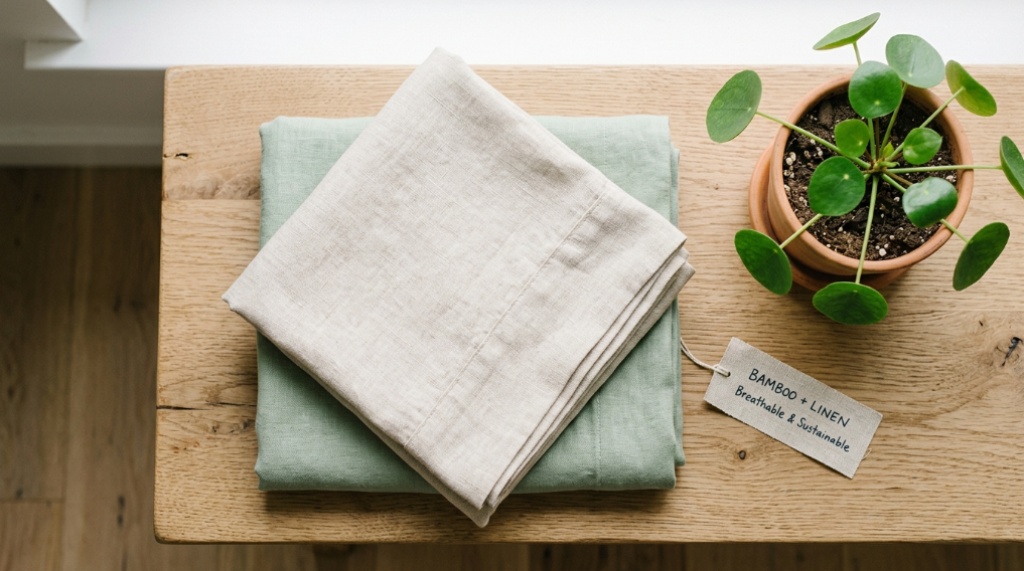
Linen: Linen is the gold standard for hot sleepers. It has a looser weave, is highly absorbent, and dries quickly. The texture is rougher than cotton, but many people find it becomes softer with each wash. Linen also has a natural ability to regulate temperature, keeping you cool when it’s warm and warm when it’s cool.
Bamboo-derived rayon: Often marketed as “bamboo,” this fabric is actually rayon made from bamboo pulp. It’s soft, breathable, and has good moisture-wicking properties, making it a solid middle-ground option between cotton and linen.
In addition to sheets, consider your comforter or blanket. A heavy duvet is counterproductive in summer. Instead, use a lightweight cotton blanket or a linen quilt that you can easily kick off if you get too warm. Layering is key—you want the ability to adjust your coverage without changing your entire bedding setup.
Room Environment Adjustments
Your bedroom environment plays a crucial role in how well you sleep during hot weather. Here are several adjustments that go beyond simply turning on the AC:
- Keep curtains closed during the day: Sunlight streaming through windows heats up the room significantly. Blackout curtains or reflective blinds can block solar heat before it enters your space.
- Use a fan strategically: Place a fan near a window to pull in cooler evening air or set it to oscillate to improve air circulation. A ceiling fan set to run counterclockwise creates a downdraft that makes the room feel cooler without lowering the actual temperature.
- Optimize window timing: Open windows in the evening when the outside temperature drops below the indoor temperature, and close them in the morning before it heats up.
- Reduce heat-generating electronics: Computers, televisions, and even phone chargers generate heat. Unplug or turn off these devices before bed to minimize unnecessary heat sources.
- Consider a dehumidifier: If the humidity is consistently above 60%, a dehumidifier can make the room feel more comfortable even at the same temperature. Lower humidity allows your sweat to evaporate more effectively.
Evening Routines and Body Temperature
Your body’s internal temperature naturally drops in the evening to prepare for sleep. You can support this process with a few simple habits:
- Take a warm shower: This may sound counterintuitive, but a warm shower before bed raises your skin temperature, which triggers your body to cool down afterward. The result is a net drop in core body temperature that promotes sleepiness.
- Avoid heavy meals and caffeine: Digestion raises your metabolic rate and generates heat. Try to finish eating at least two hours before bed and limit caffeine after the early afternoon.
- Stay hydrated but time it carefully: Drink plenty of water during the day, but reduce your intake in the hour before bed to avoid waking up to use the bathroom.
- Use a cooling towel or ice pack: Placing a chilled gel pack or a damp, cool cloth on your neck or wrists for a few minutes before sleep can help lower your core temperature quickly.
Position and Pillow Loft Considerations
Your sleeping position affects how much body heat gets trapped against the mattress and pillow.
Back sleepers: You need a pillow that supports the natural curve of your neck without elevating your head too much. A medium-loft pillow with a contoured shape can work well, but ensure the material is breathable. Consider a pillow with a cooling gel layer or a ventilated design.
Side sleepers: You generally need a higher loft to fill the space between your ear and shoulder. However, a thicker pillow also means more surface area in contact with your head, which can trap heat. Look for a pillow with a breathable core or a shredded filling that allows air to circulate.
Stomach sleepers: You need a thin, soft pillow to keep your neck in a neutral position. A thin pillow naturally traps less heat, so any breathable material will work well.
Regardless of position, consider the mattress itself. If your mattress is made of traditional memory foam, it may be retaining body heat and radiating it back toward you. A breathable mattress protector or a cooling mattress pad can add a layer of airflow between you and the foam.
Frequently Asked Questions
Does a cooling pillow actually work, or is it just marketing?
Cooling pillows can work when they are made with genuinely breathable materials or phase-change technology. Look for pillows with ventilated designs, breathable covers, or phase-change materials, and check independent reviews for real-world performance data.
Is it better to use a fan or an air conditioner for sleeping?
Both have advantages. An air conditioner lowers the actual temperature and reduces humidity, which is effective in Pennsylvania’s humid summers. A fan is less expensive and uses less energy, but it only moves air rather than cooling it.
What is the best fabric for sheets in hot weather?
Linen is generally considered the best for hot weather because of its breathability and moisture-wicking properties. Cotton percale is a close second, offering a crisp, cool feel. Avoid synthetic fabrics like polyester and microfiber, which trap heat and moisture.
How often should I wash my pillow and sheets during summer?
Sheets should be washed at least once a week during summer to remove sweat, oils, and allergens. Pillows should be washed every three to six months, but check the care label—many pillows cannot be machine washed. A pillow protector can extend the life of your pillow and reduce the frequency of washing.
Can changing my sleeping position help me stay cooler?
Yes, to a degree. Sleeping on your side or stomach exposes less of your body surface to the mattress, which can help you stay cooler. However, position changes can also affect spinal alignment, so prioritize a comfortable, supported position over one that is slightly cooler but causes neck or back pain.
Conclusion
Hot nights in Pennsylvania don’t have to mean sleepless hours. The most effective approach combines three elements: a breathable cooling pillow that doesn’t trap heat, natural-fiber bedding that wicks moisture, and a bedroom environment optimized for airflow and lower humidity. These changes work together to help your body maintain its natural temperature drop during sleep.