Clear evidence often decides whether a cyclist can show that another person caused a serious collision. Building a bicycle accident claim means connecting careless conduct with the crash, the injuries, and the financial losses that followed. Strong proof can also counter attempts to shift blame onto the rider when the facts tell a different story.
Crash Scene Photos Can Preserve Details That Disappear Fast
Photographs taken shortly after a bicycle crash can document skid marks, debris, damaged signs, lane markings, traffic signals, road defects, and the final positions of the bicycle and vehicle. Images may also show weather conditions, sight obstructions, lighting, or construction barriers that influenced what each person could see.
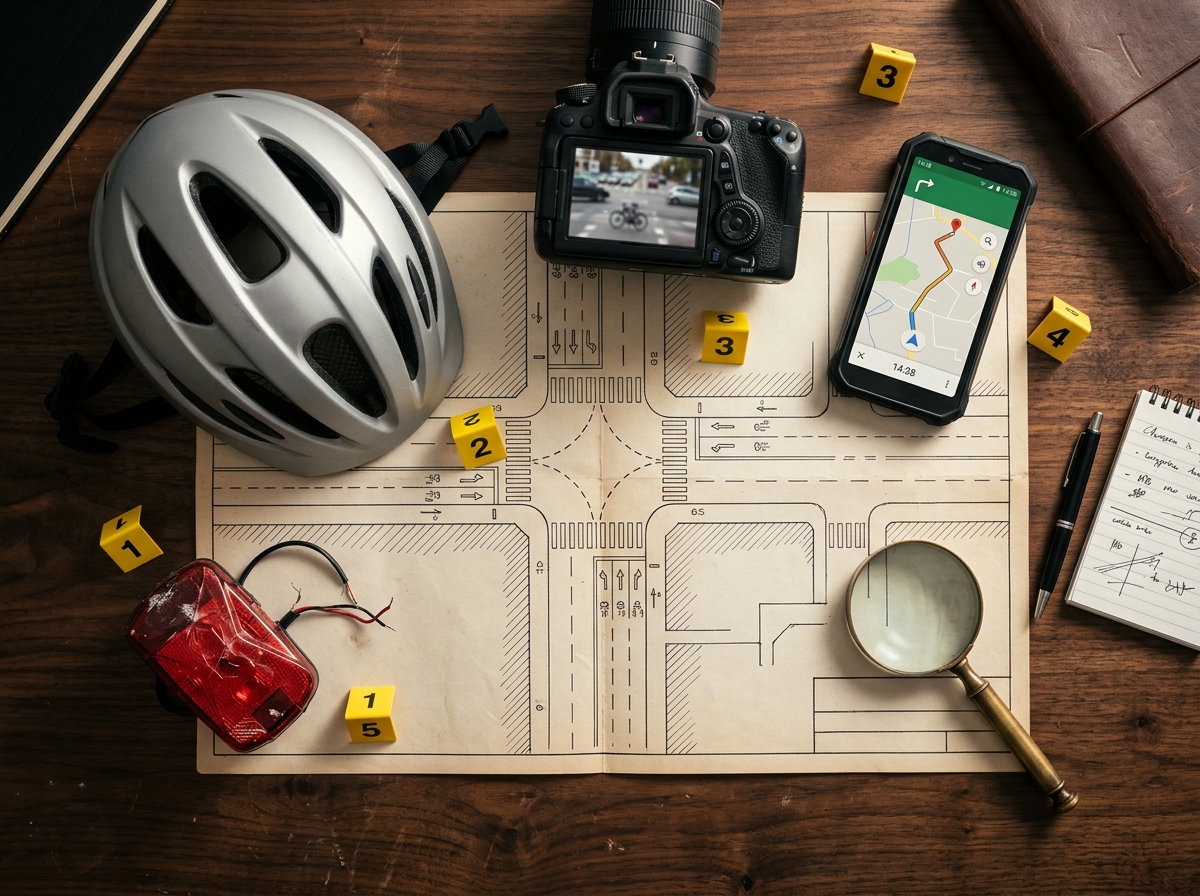
Close-up pictures of vehicle dents, broken bicycle components, torn clothing, and helmet damage can help explain the direction and force of impact. Wide-angle views provide additional context by showing how the intersection, shoulder, bike lane, or driveway was arranged at the time of the bike accident.
Witness Accounts Can Fill Gaps in Conflicting Stories
Independent witnesses can provide valuable testimony when the driver and cyclist disagree about what happened. Pedestrians, nearby motorists, business employees, or residents may have seen a driver run a light, turn without yielding, drift into a bike lane, or pass too closely.
Prompt contact with witnesses matters because memories can fade and people may become harder to locate as time passes. Written statements, recorded interviews, and later depositions can preserve what those individuals observed and give bicycle accident claims support beyond the accounts of the people directly involved.
What Can Video Footage Reveal About Driver Negligence?
Surveillance cameras often capture details that are difficult to reconstruct from memory alone. Footage from businesses, homes, traffic systems, parking lots, buses, or dashboard cameras may show vehicle speed, signal changes, lane position, turning movements, or the exact moment of a bicycle accident.
Digital recordings can disappear quickly because many camera systems automatically overwrite older files. Early preservation requests may therefore be needed to keep useful footage from being deleted before attorneys or investigators have an opportunity to obtain it.
Police Reports Help Organize the Initial Crash Record
Responding officers usually document basic information about the bicycle crash, including names, insurance details, road conditions, visible damage, witness information, and statements from those involved. Reports may also contain diagrams, citations, or observations that help attorneys understand how the collision was initially investigated.
Although a police report does not automatically decide legal responsibility, it can point investigators toward evidence that deserves closer review. Follow-up work may compare the officer’s notes with video, photographs, vehicle damage, medical records, and witness testimony to identify inconsistencies or missing facts.
Vehicle and Phone Data Can Show What Happened Before Impact
Modern vehicles may store electronic information that helps reconstruct events immediately before a bicycle accident. Event data recorders and other onboard systems can sometimes provide details about speed, braking, acceleration, or other vehicle activity, depending on the car and circumstances.
Phone records can become relevant when distracted driving is suspected. Call logs, messaging activity, application use, or other available data may help establish whether a driver was using a device around the time of the bicycle crash, although access to this information must follow applicable legal procedures.
Medical Records Connect the Collision to the Injuries
Treatment records help establish more than the cost of medical care after a bike accident. Emergency notes, imaging results, surgical reports, therapy records, and specialist evaluations can show when symptoms appeared, what injuries doctors diagnosed, and how those conditions affected the cyclist over time.
Consistent medical documentation can also respond to arguments that an injury existed before the crash or resulted from another event. Comparisons between earlier health records and post-accident findings may help doctors explain whether the collision caused a new condition or aggravated an existing one.
How Does Physical Damage Help Reconstruct a Bicycle Crash?
Damage patterns can provide important clues about the mechanics of the collision. Scrapes on a vehicle, bent wheels, cracked frames, broken forks, pedal marks, and transferred paint may help determine where contact occurred and how the bicycle moved after impact.
Preserving damaged equipment can become especially important in disputed bicycle accident cases. Repairing or throwing away the bicycle, helmet, clothing, lights, or other gear too soon may remove evidence that an accident reconstruction professional could otherwise inspect.
Traffic Records and Road Design Can Support a Negligence Claim
Signal timing information, intersection plans, roadway measurements, and traffic-control records may help explain which person had the right of way. These materials can matter when a driver claims the cyclist entered against a signal or when the collision occurred during a complicated turning sequence.
Roadway evidence may also expose visibility problems, faded markings, construction changes, or other conditions that affected the events leading to the bicycle accident. Responsibility can become more complex if a government entity, contractor, or another party contributed to an unsafe condition.
Expert Analysis Can Turn Technical Evidence Into a Clear Explanation
Accident reconstruction specialists may combine photographs, measurements, vehicle damage, electronic data, and witness accounts to explain how a bicycle crash likely occurred. Their analysis can be useful when speed, stopping distance, impact direction, or sight lines remain disputed.
Medical, vocational, or financial experts may address different parts of bicycle accident claims once negligence and damages overlap. The Lackey Law Firm can help injured cyclists preserve evidence, obtain available records, interview witnesses, review insurance arguments, and work with qualified experts when technical proof is needed to establish fault and support the full value of a claim.