Leg pain at night can disturb your rest and affect your energy the next day. Many people struggle to find comfort when they lie down. The good news is that small changes can make a big difference. With the right approach, you can ease discomfort and enjoy deeper sleep.
This guide explains practical ways to reduce pain using simple adjustments. It focuses on improving your sleep posture and creating habits that support night leg pain relief without complicated treatments.
Understanding Why Leg Pain Happens at Night
Leg pain during sleep often has clear causes. Identifying the reason helps you choose the right solution.
Common causes include:
- Muscle fatigue after long hours of standing or walking
- Poor circulation in the lower limbs
- Nerve compression from awkward positions
- Dehydration or lack of minerals
- Chronic conditions such as arthritis or restless legs syndrome
At night, your body relaxes. However, reduced movement can also slow blood flow. Therefore, pain may feel worse when you are still.
Additionally, poor alignment during sleep can strain muscles and joints. This is why adjusting how you sleep matters so much.
The Role of Sleep Position in Leg Comfort
Your sleeping position directly affects your legs. A bad posture can increase pressure on joints and restrict circulation.
On the other hand, proper sleep posture keeps your spine aligned and reduces strain. It allows muscles to relax fully.
For example:
- Sleeping flat on your back supports even weight distribution
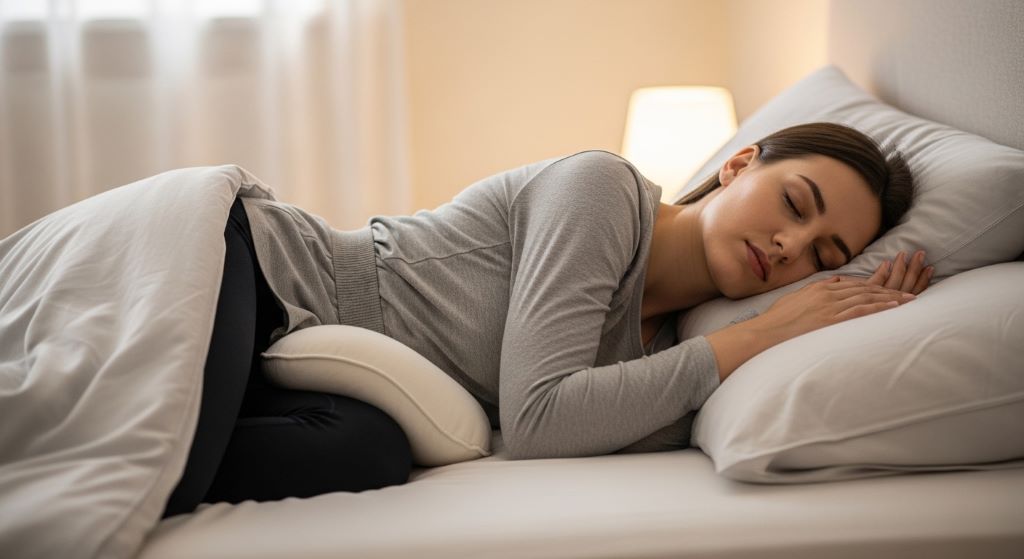
- Side sleeping can help if your knees are supported
- Sleeping on your stomach may worsen leg discomfort
Therefore, choosing the right position is one of the easiest ways to improve comfort.
Best Sleeping Positions to Reduce Leg Pain
Back Sleeping with Leg Support
This is often the best position for reducing pressure.
- Place a pillow under your knees
- Keep your legs slightly elevated
- Maintain a neutral spine
This position improves blood flow. Additionally, it reduces tension in your lower back and legs.
Side Sleeping with a Pillow Between Knees
Side sleeping can be helpful if done correctly.
- Keep your knees slightly bent
- Place a pillow between your legs
- Align your hips and spine
This reduces pressure on joints. However, without support, your hips may twist and cause discomfort.
Elevated Leg Position
Raising your legs slightly can reduce swelling.
- Use a wedge pillow or folded blanket
- Keep elevation gentle, not extreme
This technique supports night leg pain relief by improving circulation.
Simple Adjustments That Make a Big Difference
Small changes can improve your sleep quality quickly.
Adjust Your Mattress and Pillow
Your bed setup matters more than you think.
- Choose a medium-firm mattress
- Avoid overly soft surfaces
- Use supportive pillows
A poor mattress can cause misalignment. Therefore, upgrading your sleep setup may solve the problem.
Stretch Before Bed
Gentle stretching helps relax muscles.
- Focus on calves, thighs, and hamstrings
- Hold each stretch for 20–30 seconds
Additionally, stretching improves flexibility and reduces cramps.
Stay Hydrated
Dehydration can lead to muscle cramps.
- Drink enough water during the day
- Avoid excessive caffeine at night
Therefore, proper hydration supports muscle function.
Use Warm or Cold Therapy
Temperature therapy can ease discomfort.
- Warm compress relaxes muscles
- Cold packs reduce inflammation
However, choose the method that feels best for your body.
Improving Circulation for Better Sleep
Poor blood flow often contributes to leg pain. Improving circulation can reduce discomfort.
Move During the Day
Regular movement is essential.
- Take short walks
- Avoid sitting for long periods
- Stretch your legs frequently
Additionally, activity keeps your muscles active and healthy.
Elevate Your Legs Occasionally
During the day, try raising your legs for a few minutes.
This helps reduce swelling. Therefore, your legs feel lighter at night.
Wear Compression Socks
Compression socks can improve blood flow.
- Use them if recommended by a doctor
- Avoid overly tight options
They support veins and reduce pressure in your legs.
Nighttime Habits That Reduce Leg Pain
Your bedtime routine plays a big role.
Create a Relaxing Routine
A calm routine prepares your body for sleep.
- Take a warm bath
- Practice deep breathing
- Avoid screens before bed
Additionally, relaxation reduces muscle tension.
Avoid Heavy Meals Late at Night
Eating too late can affect your body.
- It may cause discomfort
- It can disturb your sleep cycle
Therefore, keep meals light in the evening.
Limit Alcohol and Caffeine
These can disrupt sleep and increase muscle tension.
- Avoid caffeine after evening hours
- Limit alcohol intake
Better sleep habits support overall comfort.
Choosing the Right Support Tools
Support tools can enhance comfort and alignment.
Pillows for Leg Support
Using the right pillow can make a big difference.
- Knee pillows for side sleepers
- Wedge pillows for elevation
- Adjustable pillows for flexibility
These tools improve sleep posture and reduce strain.
Adjustable Beds
If possible, consider an adjustable bed.
- Elevates legs easily
- Reduces pressure on joints
However, this is optional and depends on your budget.
When to Consider Medical Advice
Sometimes, leg pain may need professional attention.
Seek help if you notice:
- Severe or persistent pain
- Swelling or redness
- Numbness or tingling
- Pain that worsens over time
Additionally, underlying conditions may require treatment.
Therefore, do not ignore ongoing discomfort.
Lifestyle Changes for Long-Term Relief
Consistency is key when managing leg pain.
Maintain a Healthy Weight
Excess weight puts pressure on your legs.
- Balanced diet helps reduce strain
- Regular exercise supports muscle health
Strengthen Leg Muscles
Stronger muscles provide better support.
- Try light exercises like walking or yoga
- Focus on consistency
Additionally, stronger legs reduce fatigue.
Improve Sleep Environment
Your environment affects sleep quality.
- Keep your room cool and quiet
- Use comfortable bedding
- Maintain a regular sleep schedule
Therefore, a good environment supports better rest.
Common Mistakes That Worsen Leg Pain
Avoiding mistakes is just as important as making improvements.
- Sleeping without leg support
- Using worn-out mattresses
- Ignoring early signs of discomfort
- Staying inactive during the day
Additionally, poor habits can build over time and increase pain.
Combining Strategies for Better Results
No single solution works for everyone. However, combining small changes can bring noticeable improvement.
For example:
- Use a pillow for support
- Stretch before bed
- Maintain hydration
- Adjust your sleeping position
Together, these steps enhance comfort and reduce pain effectively.
Conclusion
Reducing leg pain while sleeping does not require complex solutions. Simple adjustments can make a significant difference. By improving your sleep posture, supporting your legs, and maintaining healthy habits, you can ease discomfort and enjoy better rest.
Additionally, focusing on daily movement, hydration, and proper alignment helps prevent pain from returning. Consistency is key. Small changes, when practiced regularly, lead to long-term relief.
FAQs
1. What is the best position to reduce leg pain at night?
Sleeping on your back with a pillow under your knees is often the most effective position.
2. Can dehydration cause leg pain while sleeping?
Yes, dehydration can lead to muscle cramps and discomfort at night.
3. Do pillows really help with leg pain?
Yes, proper support improves alignment and reduces pressure on muscles and joints.
4. How can I improve circulation before bed?
Light stretching and short walks can improve blood flow and reduce discomfort.
5. When should I see a doctor for leg pain?
If the pain is severe, persistent, or linked with swelling or numbness, consult a doctor.
Related Topics:
How to Start a Conversation With a Stranger Without Hesitation
How to Start a Speech in Class? (Memorable Ways)