

Life can be overwhelming. We face constant pressure to perform, succeed, and meet everyone’s expectations. During difficult times, many of us become our own harshest critics. However, there is a powerful alternative to self-criticism that can transform your mental wellbeing. Self compassion meditation offers a gentle path toward inner peace and emotional resilience.
This practice teaches you to treat yourself with the same kindness you would offer a close friend. Additionally, it helps you navigate life’s challenges with greater ease and acceptance. Let’s explore how you can incorporate this transformative practice into your daily routine.
Understanding Self Compassion Meditation
Self compassion meditation is a mindfulness practice that combines awareness with kindness toward oneself. Rather than judging yourself harshly for mistakes or perceived flaws, you learn to respond with understanding and care.
The practice was popularized by researcher Kristin Neff, who identified three core components of self compassion. These elements include self-kindness, common humanity, and mindfulness. Together, they create a framework for treating yourself with genuine care.
Research from Harvard Medical School shows that self compassion can reduce anxiety and depression while increasing overall wellbeing. Therefore, this practice isn’t just about feeling good temporarily. It actually creates lasting positive changes in your brain and emotional patterns.
The Three Pillars of Self Compassion
Before diving into meditation techniques, it’s important to understand the foundation of self compassion practice.
Self-kindness means speaking to yourself with warmth and understanding. Instead of beating yourself up over failures, you acknowledge that making mistakes is part of being human. This doesn’t mean making excuses or avoiding responsibility. Rather, it means responding to your imperfections with patience instead of punishment.
Common humanity reminds you that suffering and personal inadequacy are shared human experiences. You’re not alone in your struggles. Everyone faces challenges, makes mistakes, and experiences pain. This awareness helps reduce the isolation that often accompanies difficult times.
Mindfulness involves being aware of your painful thoughts and feelings without over-identifying with them. You notice what you’re experiencing without getting swept away by it. Additionally, mindfulness helps you avoid suppressing or exaggerating your emotions.
Getting Started with Basic Self Compassion Meditation
Beginning a self compassion meditation practice is simpler than you might think. You don’t need special equipment or extensive experience. All you need is a quiet space and a willingness to be kind to yourself.
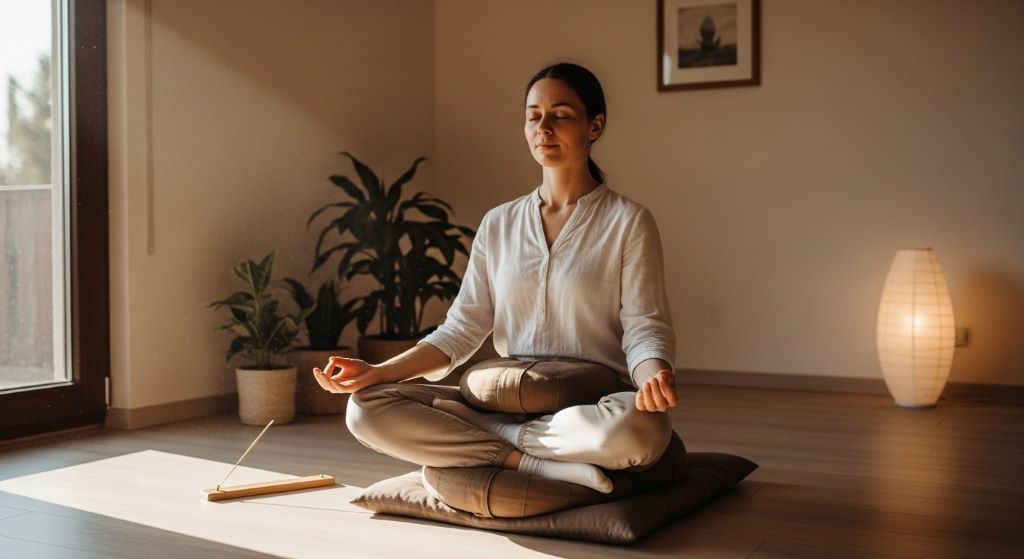
Start by finding a comfortable seated position. You can sit on a chair, cushion, or even lie down if that feels better. Close your eyes or soften your gaze downward. Take a few deep breaths to settle into the present moment.
Next, bring to mind a situation that’s causing you stress or discomfort. Don’t choose something overwhelming at first. Pick something mildly to moderately difficult. Notice how this situation makes you feel in your body and mind.
Place your hand over your heart or another soothing location. Feel the warmth of your hand and the gentle rhythm of your breathing. This physical gesture activates your body’s caregiving system and helps trigger feelings of safety and comfort.
The Self Compassion Break Technique
One of the most accessible self compassion practices is called the Self Compassion Break. This technique takes just a few minutes and can be done anywhere.
When you notice you’re struggling, first acknowledge your suffering. You might say to yourself, “This is a moment of difficulty” or “This really hurts right now.” The key is to mindfully recognize what you’re experiencing without judgment.
Second, remind yourself that suffering is part of the shared human experience. You could think, “I’m not alone in feeling this way” or “Everyone struggles sometimes.” This step helps break the sense of isolation that often accompanies pain.
Finally, offer yourself kindness. Place your hands over your heart and speak to yourself with warmth. Try phrases like “May I be kind to myself” or “May I give myself the compassion I need.” Choose words that resonate with you personally.
Loving-Kindness Meditation for Self Compassion
Loving-kindness meditation, also known as metta meditation, is another powerful tool for developing self compassion. This ancient practice systematically cultivates feelings of goodwill, first toward yourself and then toward others.
Begin by settling into a comfortable position and taking several deep breaths. Bring to mind an image of yourself or simply focus on the feeling of being yourself. Then, silently repeat phrases of goodwill directed toward yourself.
Traditional phrases include “May I be happy,” “May I be healthy,” “May I be safe,” and “May I live with ease.” However, you can adapt these to fit your needs. Some people prefer “May I accept myself as I am” or “May I be free from suffering.”
Repeat these phrases for several minutes, allowing the meaning to sink in. If your mind wanders, gently bring it back to the phrases. Don’t worry if you don’t feel warm emotions immediately. The practice works even when you’re simply saying the words.
Working with Your Inner Critic
Most people have an inner critic that regularly points out flaws and mistakes. Self compassion meditation helps you develop a healthier relationship with this critical voice.
When you notice self-critical thoughts arising, pause and take a breath. Acknowledge that your inner critic is trying to protect you, even if its methods are harsh. Often, this critical voice developed to help you avoid rejection or failure.
Thank your inner critic for trying to help, then consciously choose a more compassionate response. Ask yourself, “What would I say to a friend in this situation?” Then, offer yourself the same kindness and understanding.
This process takes practice. Your inner critic won’t disappear overnight. Nevertheless, over time, you’ll find that its voice becomes quieter and less controlling. You’ll develop a wiser, kinder internal dialogue.
Creating a Daily Self Compassion Practice
Consistency is key when developing any meditation practice. Therefore, it’s helpful to establish a regular routine that fits your lifestyle.
Start small with just five minutes per day. Choose a time when you’re least likely to be interrupted. Many people find that morning practice sets a positive tone for the day. Others prefer evening meditation to process the day’s challenges.
Set up a dedicated space for your practice. This doesn’t need to be elaborate. A comfortable chair in a quiet corner works perfectly. Additionally, you might add items that promote feelings of calm, such as a candle or meaningful object.
Track your practice in a journal or app. Note how you feel before and after each session. Over time, you’ll notice patterns and progress. This awareness helps maintain motivation and shows you the benefits of your commitment.
Overcoming Common Challenges
Many people encounter obstacles when starting self compassion meditation. Recognizing these challenges helps you navigate them more effectively.
Some individuals feel that self compassion is selfish or indulgent. However, research shows the opposite is true. When you treat yourself with kindness, you actually have more emotional resources to offer others. Self compassion strengthens rather than diminishes your capacity for caring.
Others worry that being kind to themselves will make them lazy or unmotivated. In reality, self compassion increases resilience and motivation. When you’re not afraid of harsh self-judgment, you’re more willing to take healthy risks and learn from mistakes.
You might also experience resistance in the form of numbness or difficulty accessing kind feelings. This is normal, especially if you’ve spent years being self-critical. Simply continue the practice without forcing feelings. The emotional connection will develop naturally over time.
Integrating Self Compassion into Daily Life
Self compassion meditation becomes most powerful when it extends beyond formal practice sessions. Look for opportunities throughout your day to apply these principles.
When you make a mistake at work, pause and take a self compassion break. When you’re stuck in traffic and feeling frustrated, place your hand over your heart and offer yourself kindness. When someone criticizes you, acknowledge your hurt while remembering that everyone faces criticism sometimes.
Use physical gestures to reinforce your practice. A hand on your heart, a gentle self-hug, or a soothing touch on your arm activates your body’s soothing system. These simple actions trigger physiological responses that promote calm and safety.
Notice self-critical thoughts as they arise throughout the day. Each time you catch yourself being harsh, it’s an opportunity to practice. Transform criticism into curiosity and understanding. This ongoing practice gradually rewires your habitual response patterns.
The Science Behind Self Compassion
Understanding the research behind self compassion can strengthen your commitment to practice. Studies consistently demonstrate its psychological and physical benefits.
According to research published by the American Psychological Association, self compassion is strongly associated with emotional wellbeing. It reduces symptoms of anxiety, depression, and stress while increasing life satisfaction and happiness.
Brain imaging studies show that self compassion activates neural networks associated with caregiving and positive emotions. Moreover, it deactivates threat-response systems in the brain. This means your body literally shifts from a state of stress to a state of safety.
Self compassion also improves physical health. People who practice self compassion have lower inflammation markers, better immune function, and healthier cardiovascular responses to stress. Therefore, the benefits extend far beyond mental wellbeing.
Conclusion
Self compassion meditation offers a profound path toward inner peace and emotional resilience. By treating yourself with the same kindness you would offer a dear friend, you create a foundation for lasting wellbeing. The practice involves acknowledging your suffering, recognizing your shared humanity, and responding to yourself with genuine care.
Starting a self compassion practice doesn’t require perfection or extensive experience. Simply begin with a few minutes each day, using techniques like the Self Compassion Break or loving-kindness meditation. Over time, these practices will transform your relationship with yourself and enhance your overall quality of life.
Remember that developing self compassion is a journey, not a destination. Be patient with yourself as you learn these new skills. Each moment you choose kindness over criticism is a victory worth celebrating.
Frequently Asked Questions
What is the difference between self compassion and self-esteem?
Self-esteem is based on evaluating yourself positively and often requires comparing yourself to others. Self compassion, however, doesn’t depend on being better than others or meeting certain standards. It involves treating yourself with kindness regardless of success or failure. Additionally, self compassion remains stable even when you make mistakes, while self-esteem can fluctuate based on performance.
How long does it take to see benefits from self compassion meditation?
Many people notice subtle shifts in their inner dialogue within a few weeks of regular practice. However, deeper changes typically emerge after two to three months of consistent practice. The timeline varies depending on factors like practice frequency, personal history, and the severity of self-critical patterns. Even small amounts of daily practice create cumulative benefits over time.
Can self compassion meditation help with anxiety and depression?
Yes, research shows that self compassion meditation can significantly reduce symptoms of anxiety and depression. The practice helps break cycles of rumination and self-criticism that often fuel these conditions. However, self compassion meditation should complement, not replace, professional mental health treatment for clinical anxiety or depression. Always consult with a healthcare provider for serious mental health concerns.
Is self compassion the same as making excuses for bad behavior?
No, self compassion is not about making excuses or avoiding accountability. It involves acknowledging mistakes and their impact while responding with understanding rather than harsh judgment. Self compassion actually increases motivation to change problematic behaviors because you’re not paralyzed by shame. You can hold yourself accountable while still treating yourself with kindness and respect.
Do I need to meditate for a long time to practice self compassion?
Not at all. While longer meditation sessions can deepen your practice, even brief moments of self compassion throughout the day are beneficial. A Self Compassion Break takes just one to two minutes and can be done anywhere. The key is consistency rather than duration. Five minutes of daily practice is more effective than occasional longer sessions.
Related Topics:
How to be smarter? Discover the best tips to stimulate the brain
The Ancient Practice of Fasting and Meditation: A Guide to Better Health